


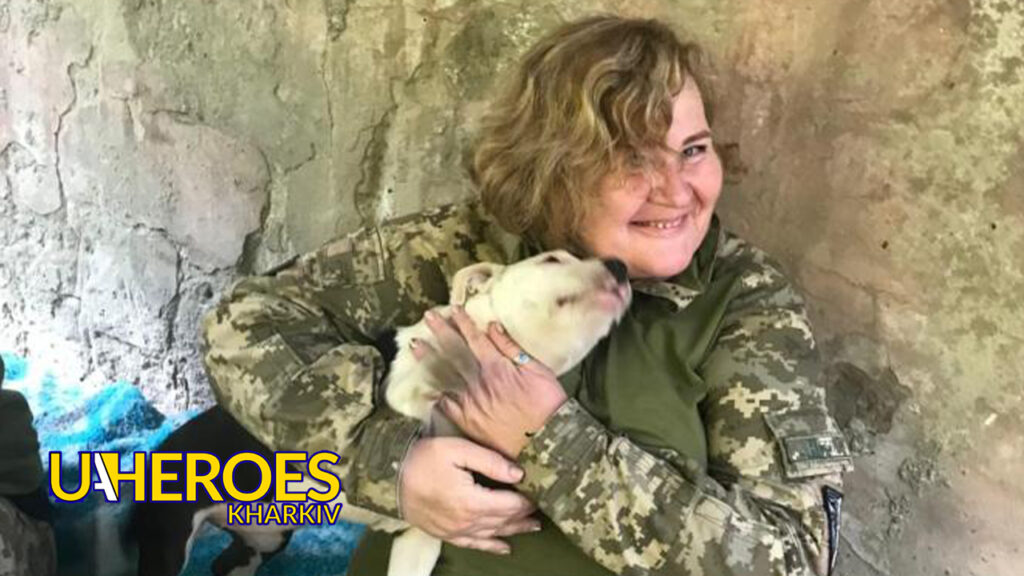
Before the full-scale war, Hanna Bezverkha from Krasnokutsk had a successful career and a stable income. But when Russia launched a new stage of aggression against Ukraine, the woman turned her office into a volunteer headquarters and her car into a rescue vehicle. She traveled more than 400 thousand kilometers along frontline roads, delivering aid to Ukrainian defenders where every trip could become the last.
Source: “Slobidskyi Krai”
When justice runs in your blood
Hanna Bezverkha’s friends always described her character briefly: “You’re like an ambulance — always saving everyone.” But she had to build that strength from an early age. When Hanna was 26, her mother passed away, and the responsibility of caring for her two younger sisters and helping them build their lives fell on her shoulders.

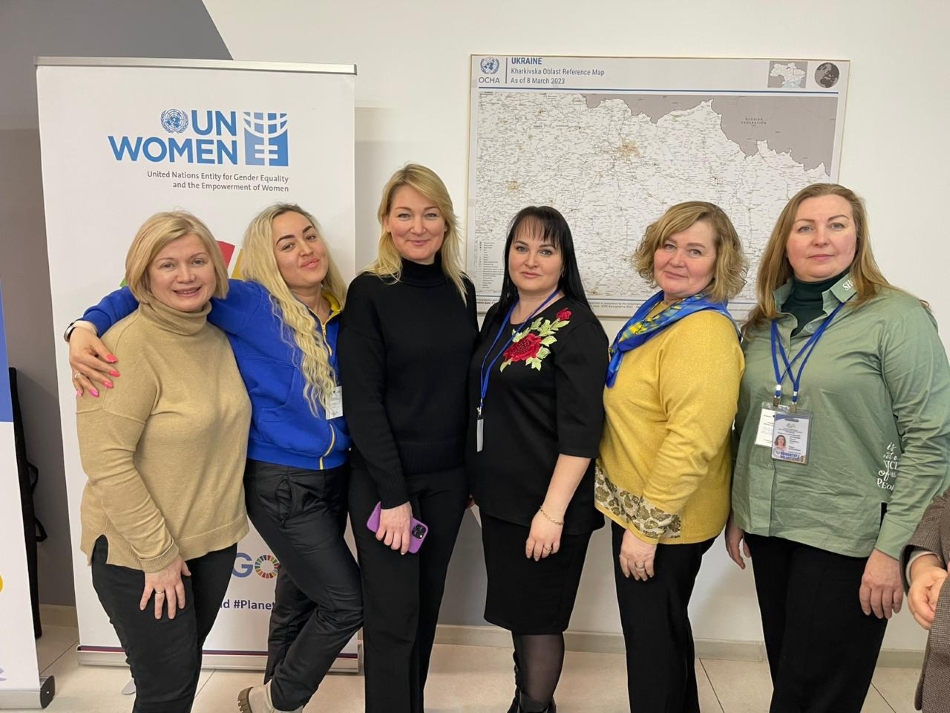
In peacetime
Mrs. Hanna’s strong sense of justice runs in her blood: on her father’s side, her grandfather was an Ichkerian. At one time, she collected and sent medicines to Georgia when war reached the country. Later, she helped those who fought in Chechnya against Russia.
When Russia started the war against Ukraine in 2014, Hanna joined efforts to support Ukrainian soldiers without hesitation.
The fifth year together
February 2022 demanded immediate decisions. A call from neighboring Okhtyrka in the Sumy region determined the first tasks — the local hospital suddenly turned into a military hospital where wounded people were being brought in large numbers. There was a shortage of the most essential supplies.
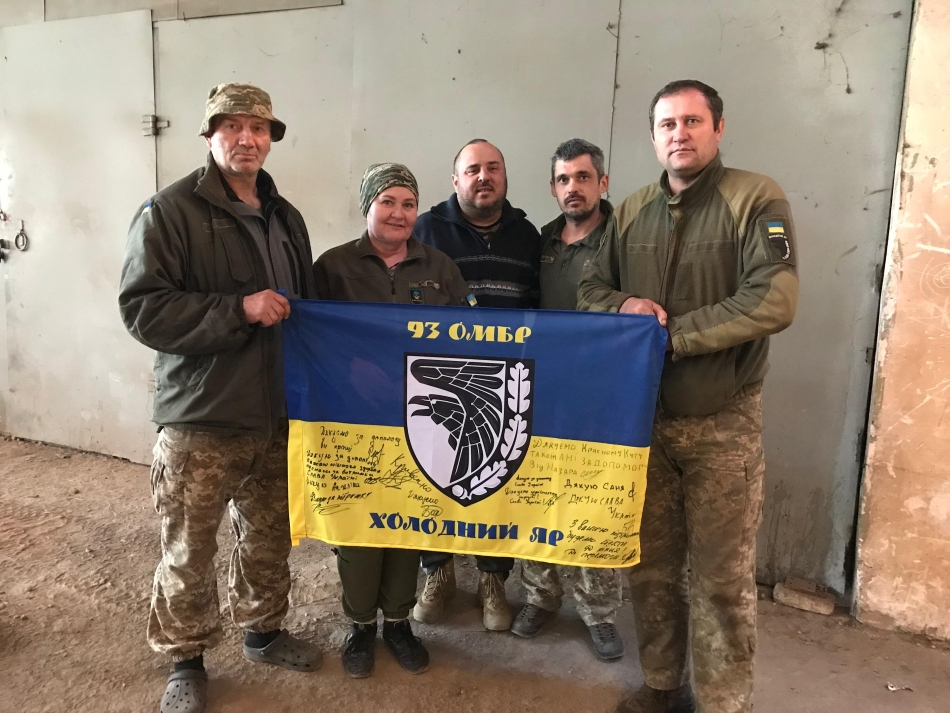
Four years together
Hanna recalls how she and like-minded people emptied local pharmacies — buying all available bandaging supplies and spending their own savings. When the money ran out, they used everything they had at home. Women cut up bed linen, boiled it, and carefully ironed it to make the fabric as sterile as possible before delivering it to Okhtyrka.
Then, on March 3, 2022, fate connected Hanna with the 93rd Separate Mechanized Brigade “Kholodnyi Yar”.
“Do you remember when, at the beginning of the war, there was a short curfew — from 9 a.m. to 3 p.m.? There was no fuel, there was nothing,” Hanna recalls. “Then my colleague from the brokerage company, Volodymyr Stryzhak, called me and said: ‘I’ll bring the cargo to your office, and you’ll somehow get it to the 93rd Brigade. I’m on a tight schedule.’ At that moment, my brokerage office in Krasnokutsk instantly turned into a volunteer hub. I didn’t even know the road to Kyrykivka then — I followed word of mouth — but I delivered it because the guys were holding the front line, which was already approaching our Bohodukhiv district.”
That connection has now continued for the fifth year. During this time, fate brought the volunteer from Krasnokutsk together with hundreds of soldiers.

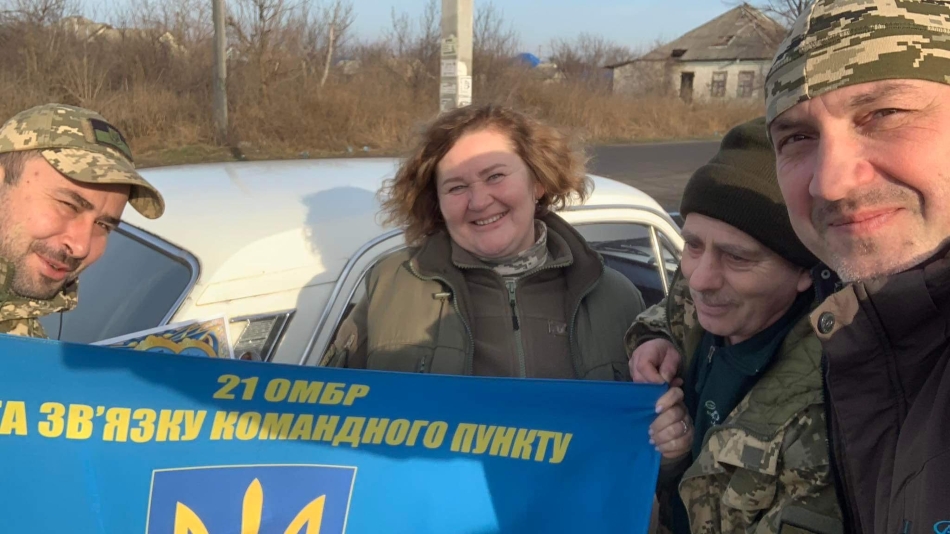
Meeting with the soldiers
“Sometimes, while waiting to evacuate your own people, other soldiers come up and say: ‘Oh, are you a volunteer? We need some help here, can you assist us?’ And how could I leave them? They are all our people — there is no such thing as ours and theirs here,” the woman says.
Today, fellow residents from the Krasnokutsk community are also serving in the 93rd Brigade. Hanna Bezverkha regularly delivers personalized care packages for them from their parents.
When the brigade was redeployed to the Izium direction, the soldiers were worried: “Well, that’s it, now you’ll leave us behind because we’re far away.” Hanna replied: “How could I leave you?” Since then, she has followed them to every section of the front line.
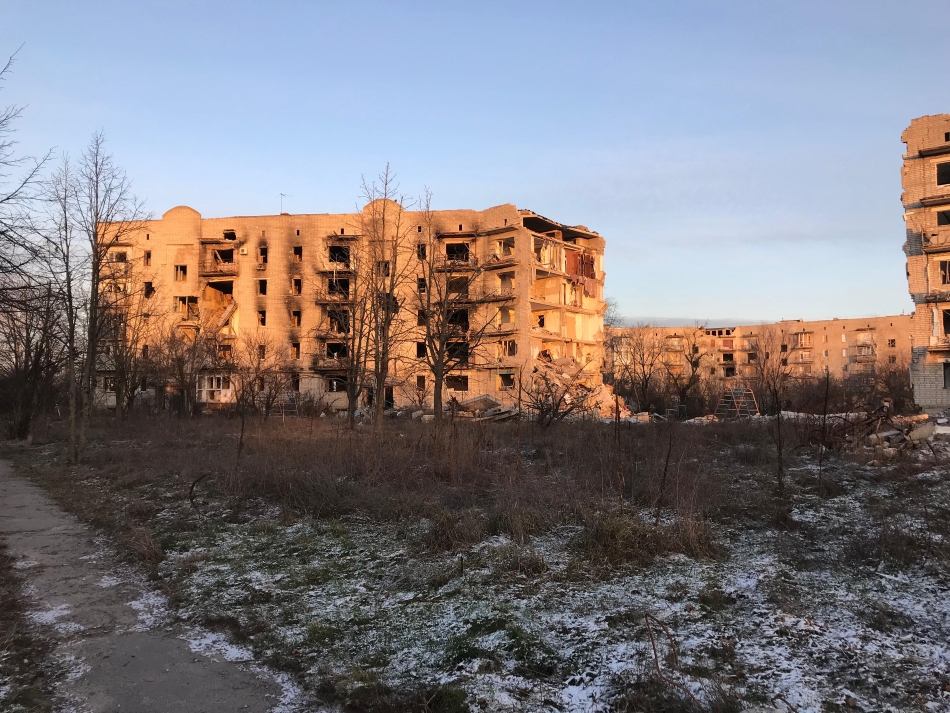
After Russian shelling
One potato for four
Back in March 2022, supply chains had not yet been established. When volunteers arrived at the positions, they saw that the defenders lacked even the most basic things — there was not enough food.
“It was March 8, 2022. I remember one of the battalion commanders arriving, eyes full of tears, standing there asking the deputy for logistics: ‘Do you have anything for Pysarivka? My guys are sharing one potato among four people…’ I felt sick at that moment. It was simply horrifying — people were holding the front line in freezing cold and dividing one potato between four. After that, I couldn’t eat for three days,” the volunteer recalls.
While Hanna was constantly traveling the roads, her home became another front line. On February 24, 2022, her daughter Natalia came to her and said: “Mom, I can’t just sit here. The guys are building checkpoints — what should I do?” Her mother replied: “Cook for them.”

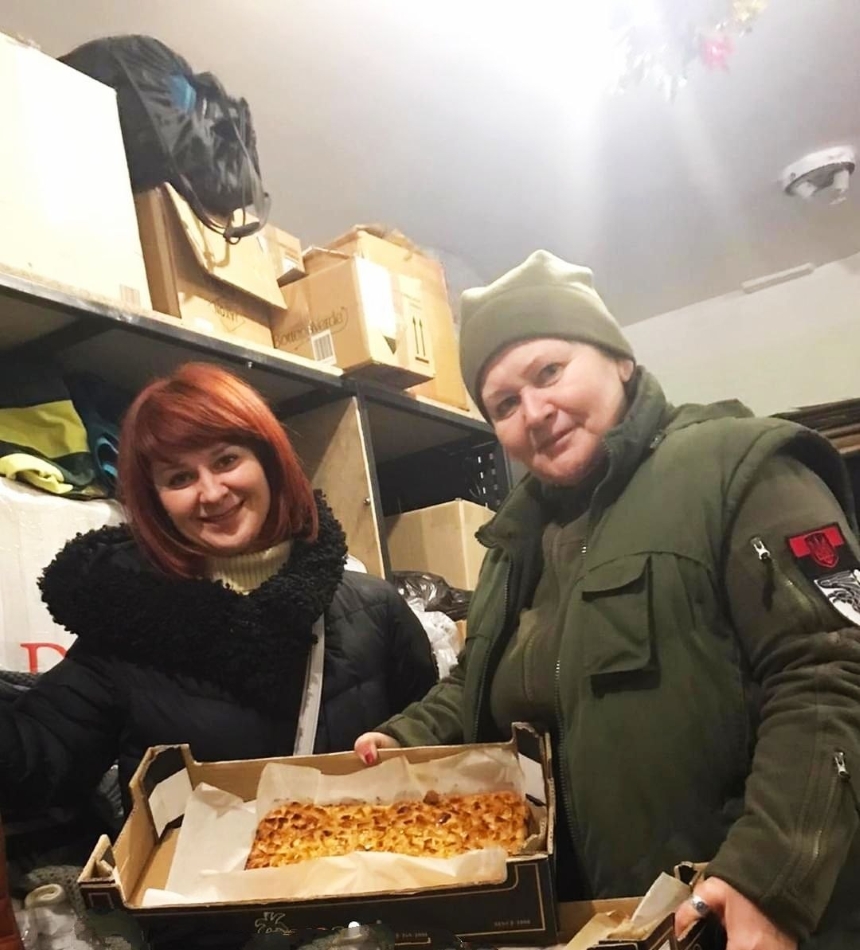
More than 30 kg of treats for hospital soldiers were prepared by daughter Natalia in one day
For two months straight, Natalia single-handedly cooked hot meals every day for 50 people — feeding five checkpoints and the military enlistment office (at that time, soldiers from the Ivano-Frankivsk region had arrived to provide support). For the next two years, the daughter traveled together with her mother to the Donetsk region. Later, she married a serviceman from Volyn, and now Hanna has a one-and-a-half-year-old granddaughter, little Milanochka.
47 thousand people through the community and seven tons of sausage
Hanna Bezverkha’s volunteer marathon quickly expanded beyond purely military aid. When the mass evacuation began, the Krasnokutsk community turned into a huge transit hub. During the first three days, almost 47 thousand displaced people passed through it. People arrived with just one backpack and babies in their arms, completely without money or belongings.
At that time, Hanna received a call from a friend in Poltava who offered: “Come here, I’ll load your car with everything I have.” There was baby food, diapers, and expensive baby purées in jars. All of it was handed directly to people without any paperwork or bureaucracy.
At the same time, deputy and entrepreneur Oleksandr Skoryk got in touch: “What’s going on with you? Why haven’t you called? What help do you need? Come over — I’ll give you about seven tons of sausage.”
Hanna immediately contacted the head of the Krasnokutsk community, Iryna Karabut. Together, they found vehicles, went there, and for two days transported this enormous amount of food to feed people.
On the second day, while returning with another load of sausage, something happened that Hanna and her daughter Natalia will never forget. A military convoy was moving toward the volunteer vehicles.
“I told our driver Serhii: ‘Honk at them, flash the headlights — maybe we can at least throw some sausage to the guys.’ He slowed down and signaled… Then our tank drove out from behind a KrAZ and slowly turned its barrel directly toward our vehicle. And our car had no flag, no markings, nothing. Natasha turned pale and said: ‘Mom, what if the Russians have already broken through?..’ At that moment I remembered every prayer I had never even known before,” the volunteer recalls.
Hanna overcame her fear, opened the door, and shouted to the soldiers: “Guys, do you want sausage?” Someone from the convoy answered: “We do! Do you have bread?” — “Sorry, no bread, only sausage!”
The convoy had no right to stop — the vehicles kept moving. So, while driving, they tossed sausage sticks directly into soldiers’ hands, through KrAZ windows, and into open tank hatches.
“The soldiers were sitting there with rifles, tense as strings, because who knows what we were throwing — sausage or a grenade. They grabbed it and ate while moving… And Natalia and I stood by the roadside watching them and crying. All the guys were so young — 19, 20, 22 years old. Still children. They hadn’t even really seen life yet and had already ended up in such a terrible hell,” the woman recalls.
Children of the front line and the call sign Angelika
Even though many soldiers have already been discharged due to health conditions or severe injuries, Hanna has not lost contact with them. They became like family to her. The soldiers call her differently: for some, she is addressed by her full name and patronymic (Hanna says that when she hears a formal address, she immediately knows the guys urgently need something), at the front she has the official call sign Angelika. But most often, they simply call her — Mom.
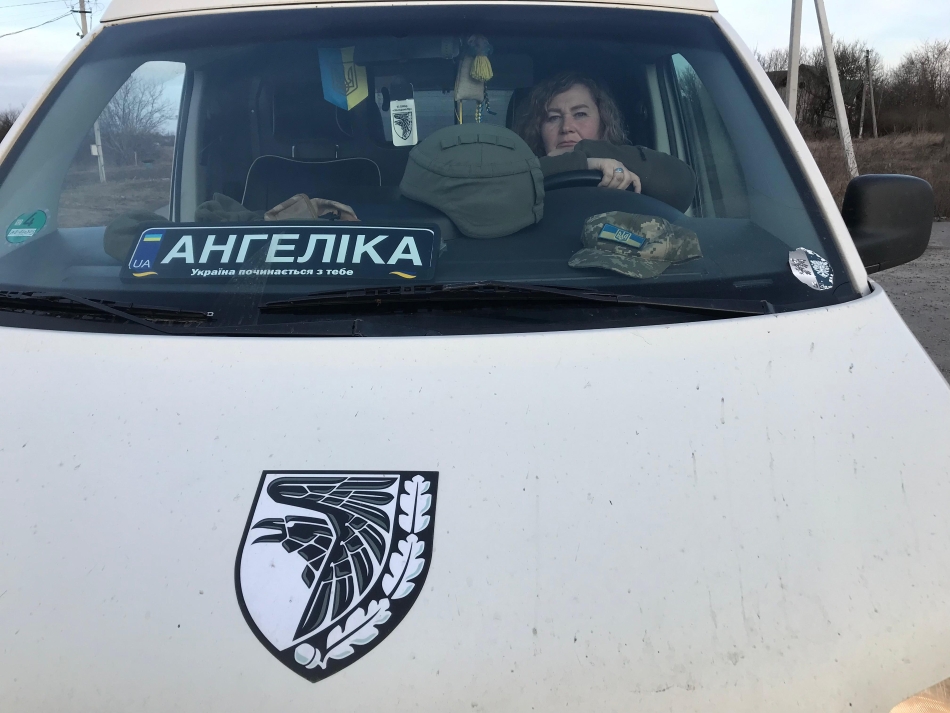
On the way to the Defenders
“For some of them I’m probably already almost a grandmother, not just a mother,” the volunteer smiles. “When the guys were at the front, many children were being born in the rear. We bought and sent them diapers to Volyn, Odesa, and Cherkasy regions in huge batches — 10–15 packs at a time. And we still keep in touch. Recently I was in Volyn and saw beautiful baby clothes for boys — I couldn’t resist and bought a few. I call the families of our soldiers and say: ‘Once I clear my schedule of trips, I’ll just bring you gifts.’”
Routes “hand to hand”
Hanna Bezverkha does not work through large logistics headquarters — she chose a direct, personal delivery approach where every shipment is handed over in person.
“I work directly with units and hand everything over personally. That way I know for sure the aid goes straight to the guys at the positions. Drones or batteries go to the pilots, medicine to the medics. I know no one will use that vehicle to go shopping for bread,” the volunteer says.
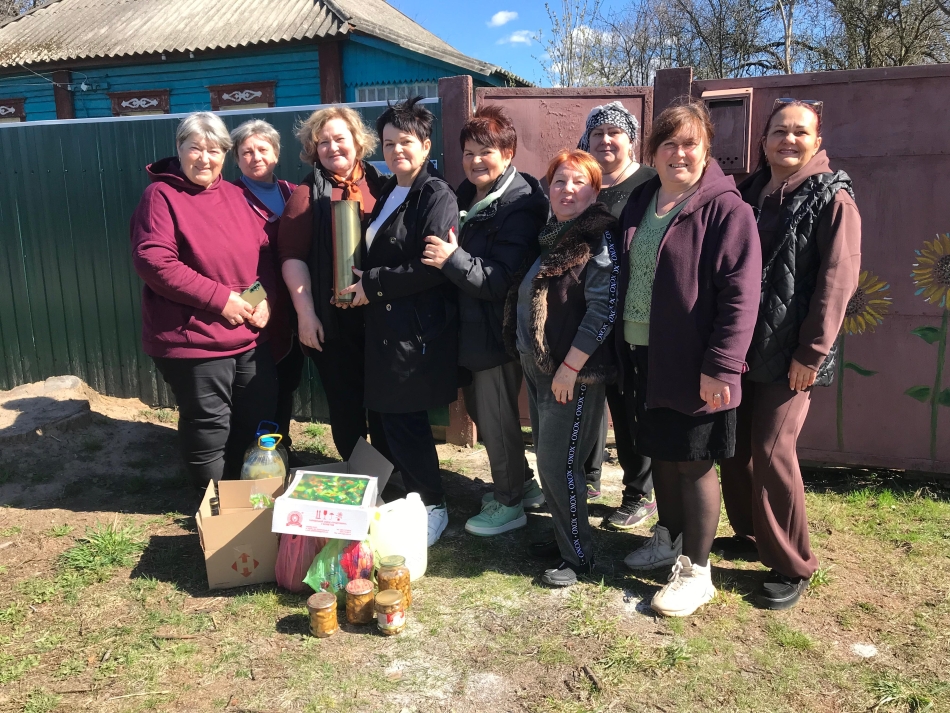
With community volunteers
At such a pace, over three and a half years, the odometer of her car has recorded more than 400,000 kilometers. On average, that is about 400 kilometers of frontline roads every day.
When the car can no longer withstand the strain and goes into repair, Hanna does not stop her work — she sends supplies by mail. The demands from the front are now severe. First and foremost, strong painkillers in large quantities are needed to relieve pain during evacuation to hospitals. The second shortage is car tires and spare parts.
“Tires are destroyed instantly. Hit a piece of shrapnel — and the wheel is gone. I now constantly carry two spare wheels in my car. Because when you are driving at high speed, you don’t choose a route or avoid potholes. You just need to get out as fast as possible, because there is already an enemy drone buzzing above your head,” Hanna explains.
Volunteer work on the edge of exhaustion
Hanna Bezverkha’s schedule includes 8–9 trips per month. Before each mission, supplies must be found, purchased, and sorted. Local women help, some goods are collected by volunteers in Kharkiv, and now some also arrive from Volyn through her daughter.

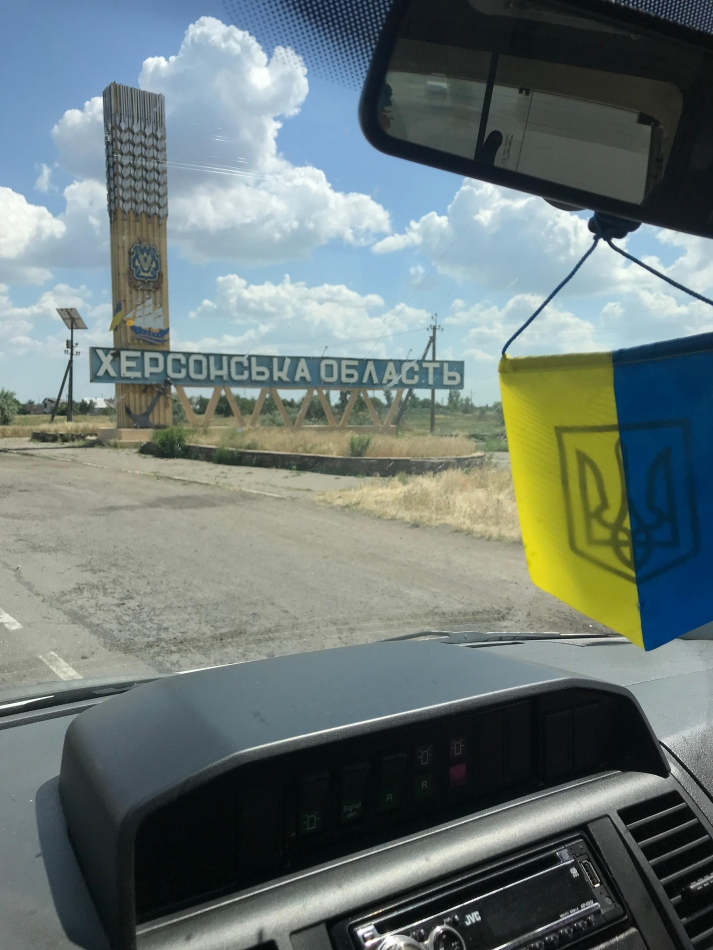
Help for Kherson residents / photo: Hanna Bezverkha
When things get difficult, she remembers the summer of 2023, when Russian forces blew up the Kakhovka Hydroelectric Power Plant: “We immediately headed to the Kherson region. We brought powerful 500-cubic-meter pumps for draining water, boats, and generators. We collected everything — from diapers to animal feed, because many abandoned pets were left there. In one week, we went to the Kherson region twice. We were so exhausted that we started having real hallucinations. I was driving at night, looking at the road, and told my friend: ‘Listen, I see deer running in front of me…’ She suddenly cursed and said: ‘That’s it! We’re stopping and sleeping right on the road!’ We barely stopped, leaned our heads back — and fell asleep like dead.”
Alone on the frontline roads
Hanna’s relatives understand her dangerous missions, although the number of frontline incidents keeps growing. She recalls a trip when she had to deliver medicine and pick up wounded soldiers, but the situation changed instantly:
“The soldiers were evacuated in an APC, and we had to get out on our own. Thick fog came down. Suddenly a vehicle with our military pulled up, and the soldiers looked at us: ‘What are you doing here? Enemy sabotage groups are operating here — get out quickly!’ So we moved. Around us were trees shattered by shelling — nothing was visible. We kept winding through the forest for a long time until we barely managed to get onto the road. I thought we wouldn’t make it out.”
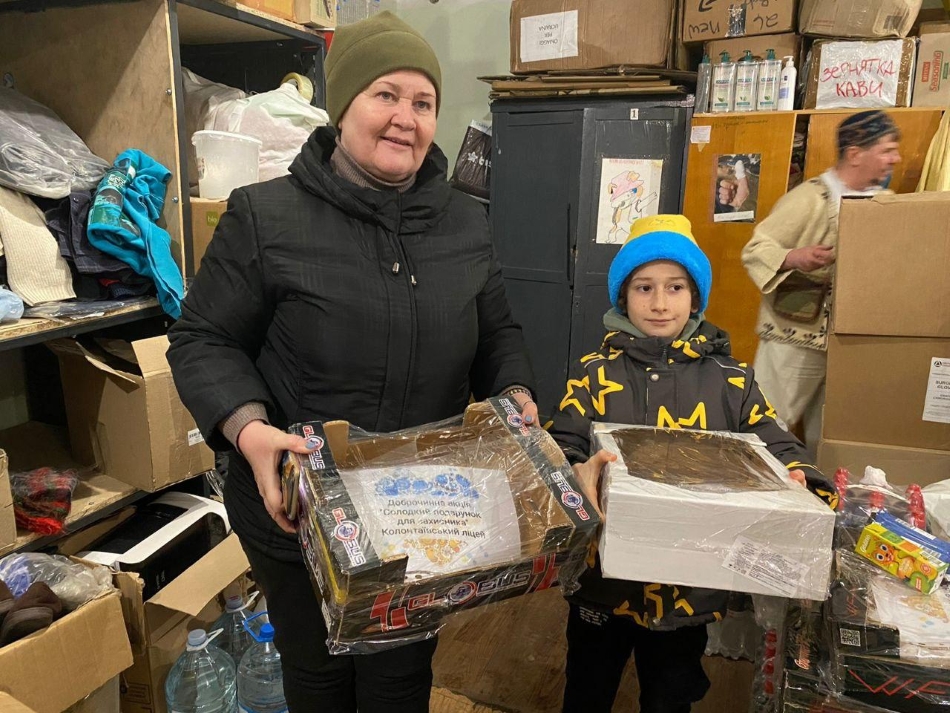
Aid for the soldiers
While Hanna and her daughter Natalia were going through these challenges, at home they were waiting for Hanna’s son Ismail, who was only 10 years old at the beginning of the full-scale invasion. Leaving the child behind, the volunteers only asked neighbors to take care of him.
Hanna’s son fully shares her position. Having health limitations, he completely changed his profession and went to work at a defense enterprise. His logic is simple: “Mom, if I’m not in the army, then I must work for the army.”
Now Hanna mostly travels alone on frontline routes. Sometimes medics provide escort if evacuation is needed, but most often she drives alone.
“I can’t risk anyone. If something happens on the road, let it be only me. God forbid someone gets hurt or killed in my car — people would curse me even in the afterlife. The car has been hit by shrapnel more than once, and there have been impacts under the wheels. I even put a sticker on the back — ‘Witch on a broomstick.’ The guys gave it to me, saying: ‘This is to cover the holes from shrapnel,’” the volunteer says.
Six names on granite and the fuel of hatred
For Hanna herself, this war is a deeply personal tragedy. Since 2014, her family has lost six men. Two were killed before 2019, and four more after the full-scale invasion. The last one was Oleh — the younger brother of her late husband, whom they raised from the age of nine, took to the sea for the first time in his life, and showed him Kyiv and Uman.
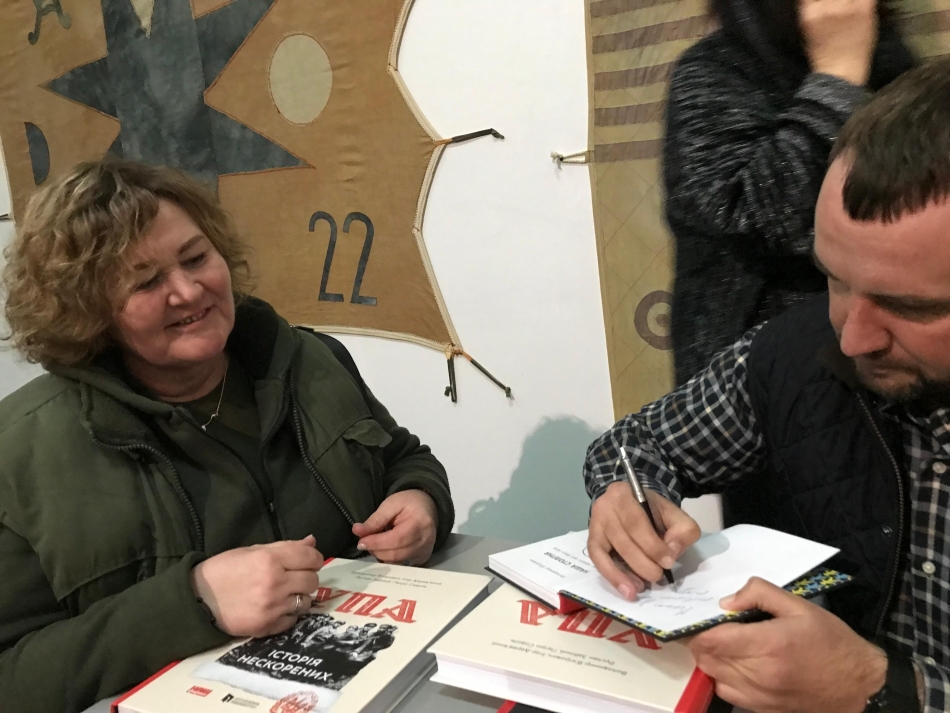
A book for memory
That is why she continues her work without any hesitation or doubt, despite everything. Although she admits that volunteering has become much harder now. Society is exhausted financially and emotionally, burned out by corruption scandals. Donations are decreasing, and some people are trying to distance themselves, saying: “This is not my war.”
“I look at them and think: it’s not my war either, I didn’t want it. Before the invasion, I was among the top 10 managers of a brokerage company, living a good life and traveling abroad. But now priorities are different. When colleagues invite me to work seminars, the guys from the front write: ‘When will you be here? We need help.’ That’s how we live,” the volunteer shares.
Photos provided by Hanna Bezverkha